Note
Access to this page requires authorization. You can try signing in or changing directories.
Access to this page requires authorization. You can try changing directories.
Check the Domains FAQ if you don't find what you're looking for.
If OVH is your DNS hosting provider, follow the steps in this article to verify your domain and set up DNS records for email, Skype for Business Online, and so on.
After you add these records at OVH, your domain will be set up to work with Microsoft services.
Important
Microsoft recommends that you use roles with the fewest permissions. Using roles with the fewest permissions helps improve security for your organization. Global Administrator is a highly privileged role that should be limited to emergency scenarios when you can't use an existing role. For more information, see About administrator roles in the Microsoft 365 admin center.
Tip
Some configuration tasks might be complex to perform. For technical support, follow these steps:
- Sign in to the Microsoft 365 admin center.
- At the bottom right, select Help & Support.
- In the Support Assistant pane that opens, enter your question.
- Review the results. If you still have questions, select Contact support.
To learn about your options for contacting support, see Get support for Microsoft 365 for business.
Add a TXT record for verification
Before you use your domain with Microsoft, we have to make sure that you own it. Your ability to log in to your account at your domain registrar and create the DNS record proves to Microsoft that you own the domain.
Note
This record is used only to verify that you own your domain; it doesn't affect anything else. You can delete it later, if you like.
To get started, go to your domains page in OVH by using this link. You'll be prompted to log in.
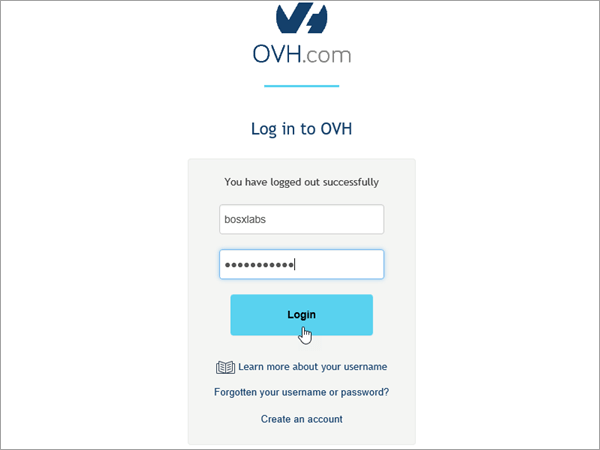
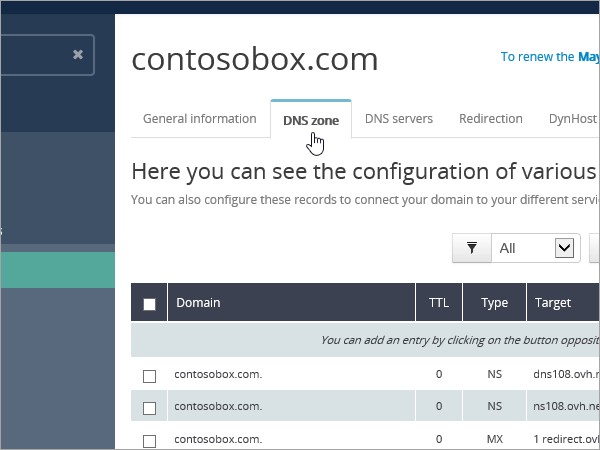
On the dashboard landing page, under View all my activity, select the name of the domain that you want edit.
Select DNS zone.
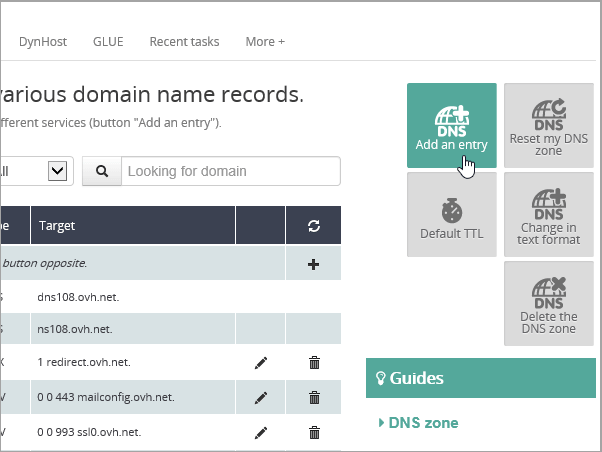
Select Add an entry.
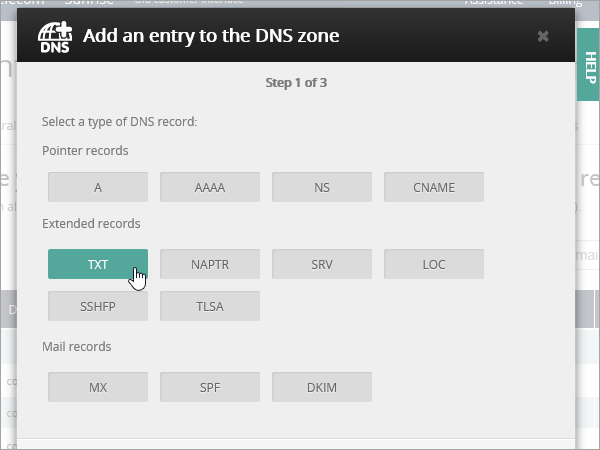
Select TXT
In the boxes for the new record, type or copy and paste the values from the following table. To assign a TTL value, choose Custom from the drop-down list, and then type the value in the text box.
Record type Sub-domain TTL Value TXT (leave blank) 3600 (seconds) MS=msxxxxxxxx
Note: This is an example. Use your specific Destination or Points to Address value here, from the table. How do I find this?Select Next.
Select Confirm.
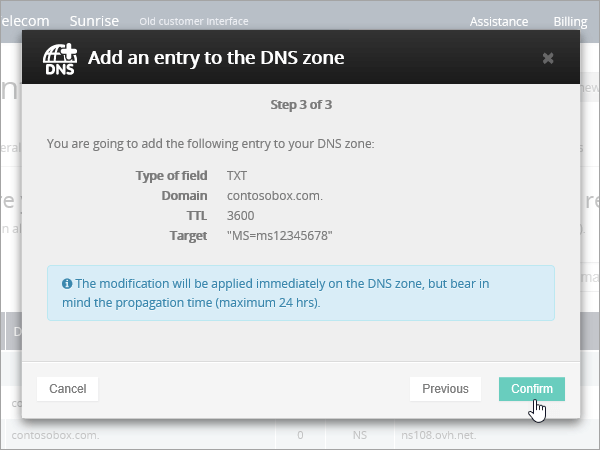
Wait a few minutes before you continue, so that the record you just created can update across the Internet.
Now that you've added the record at your domain registrar's site, you'll go back to Microsoft and request the record. When Microsoft finds the correct TXT record, your domain is verified.
To verify the record in Microsoft 365:
In the admin center, go to the Settings > Domains.
On the Domains page, select the domain that you're verifying, and select Start setup.
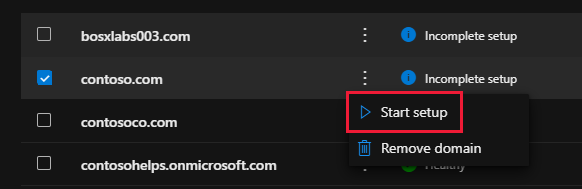
Select Continue.
On the Verify domain page, select Verify.
Important
Microsoft recommends that you use roles with the fewest permissions. Using roles with the fewest permissions helps improve security for your organization. Global Administrator is a highly privileged role that should be limited to emergency scenarios when you can't use an existing role. For more information, see About administrator roles in the Microsoft 365 admin center.
Add an MX record so email for your domain will come to Microsoft
To get started, go to your domains page in OVH by using this link. You'll be prompted to log in.
On the dashboard landing page, under View all my activity, select the name of the domain that you want edit.
Select DNS zone.
Select Add an entry.
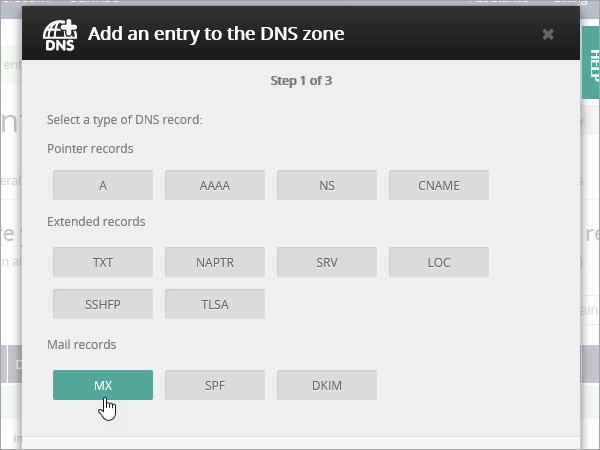
Select MX.
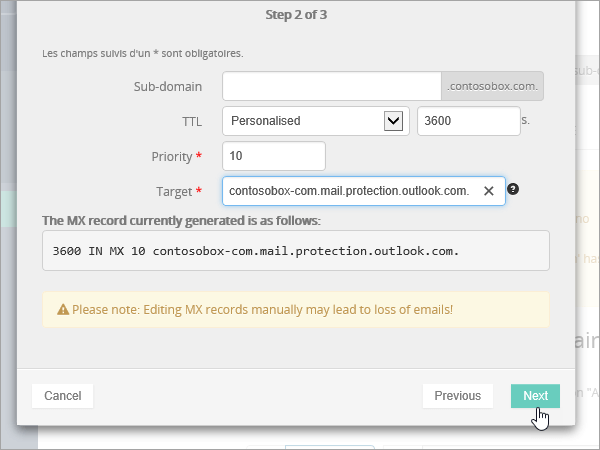
In the boxes for the new record, type or copy and paste the values from the following table. To assign a TTL value, choose Custom from the drop-down list, and then type the value in the text box.
Note
By default OVH uses relative notation for the target, which adds the domain name to the end of the target record. To use absolute notation instead, add a dot to the target record as shown in the table below.
Sub-domain TTL Priority Target (leave blank) 3600 (seconds) 0
For more information about priority, see What is MX priority?<domain-key>.mail.protection.outlook.com.
Note: Get your <domain-key> from your Microsoft account. How do I find this?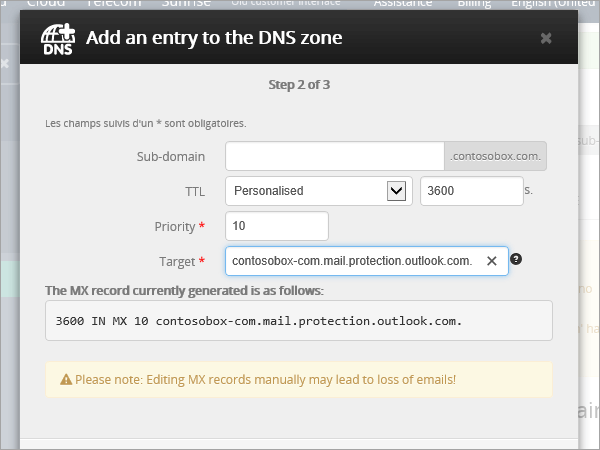
Select Next.
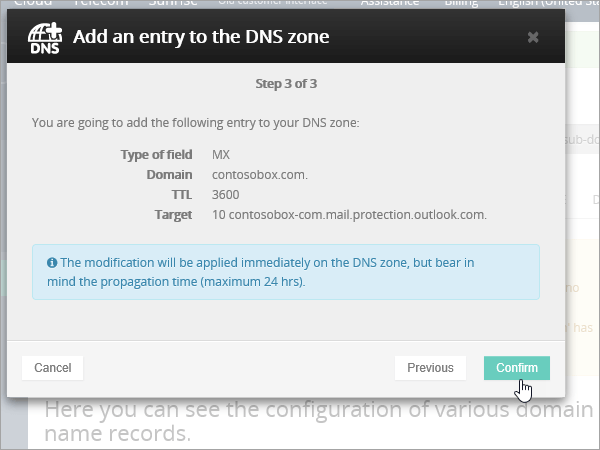
Select Confirm.
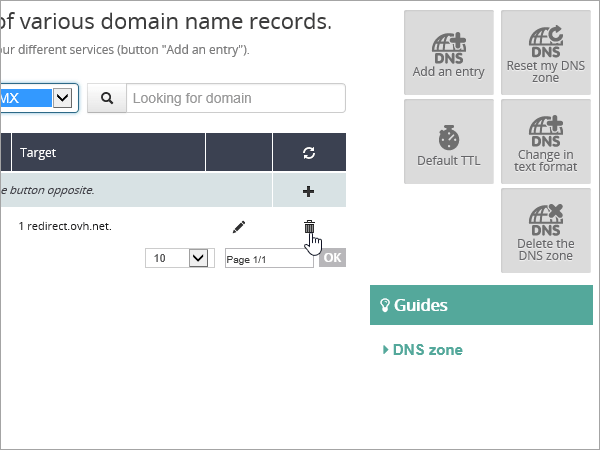
Delete any other MX records in the list on the DNS zone page. Select each record and, in the Actions column, select the trash-can Delete icon.
Select Confirm.
Add the CNAME record required for Microsoft
To get started, go to your domains page in OVH by using this link. You'll be prompted to log in.
On the dashboard landing page, under View all my activity, select the name of the domain that you want edit.
Select DNS zone.
Select Add an entry.
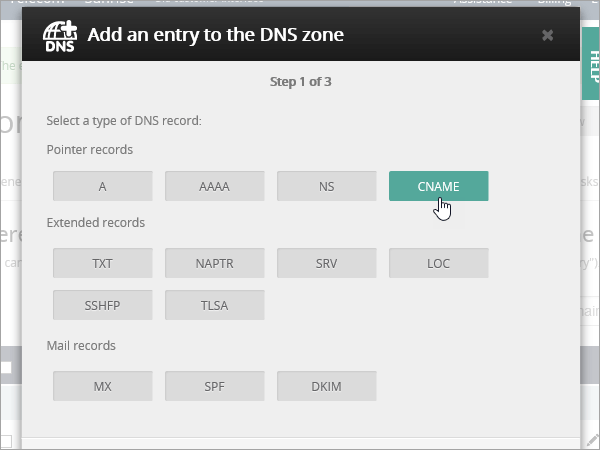
Select CNAME.
In the boxes for the new record, type or copy and paste the values from the first row of the following table. To assign a TTL value, choose Custom from the drop-down list, and then type the value in the text box.
Sub-domain TTL Target autodiscover 3600 (seconds) autodiscover.outlook.com. 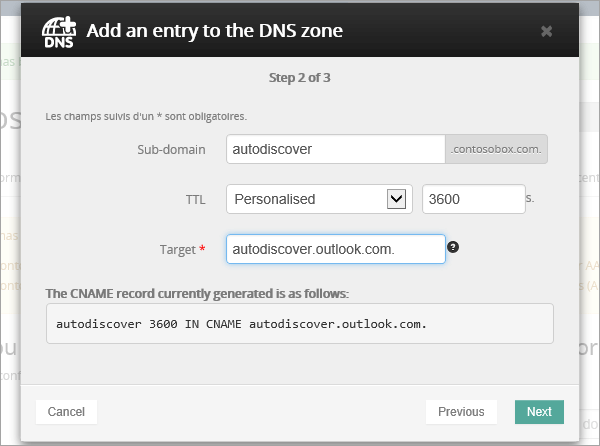
Select Next.
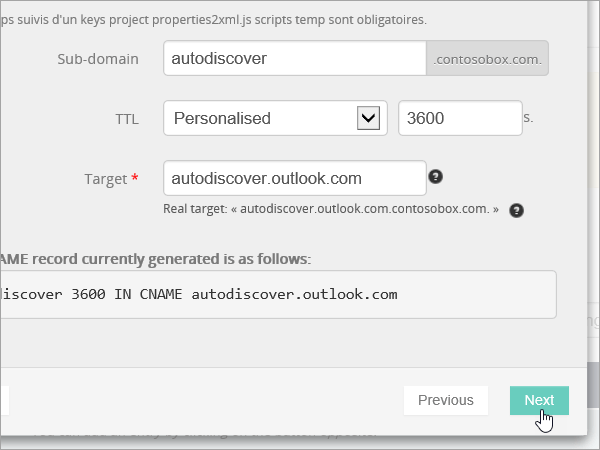
Select Confirm.
Add a TXT record for SPF to help prevent email spam
Important
You cannot have more than one TXT record for SPF for a domain. If your domain has more than one SPF record, you'll get email errors, as well as delivery and spam classification issues. If you already have an SPF record for your domain, don't create a new one for Microsoft. Instead, add the required Microsoft values to the current record so that you have a single SPF record that includes both sets of values.
To get started, go to your domains page in OVH by using this link. You'll be prompted to log in.
On the dashboard landing page, under View all my activity, select the name of the domain that you want edit.
Select DNS zone.
Select Add an entry.
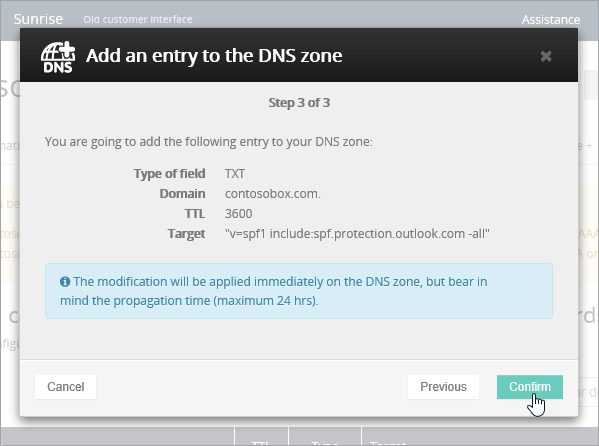
Select TXT.
In the boxes for the new record, type or copy and paste the following values. To assign a TTL value, choose Custom from the drop-down list, and then type the value in the text box.
Sub-domain TTL Value (leave blank) 3600 (seconds) v=spf1 include:spf.protection.outlook.com -all <br/Note: We recommend copying and pasting this entry, so that all of the spacing stays correct. 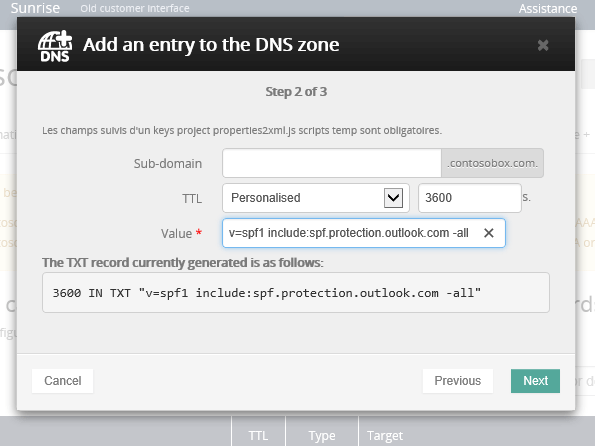
Select Next.
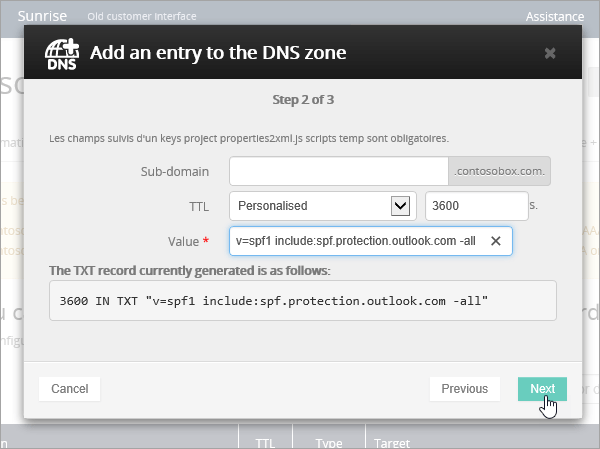
Select Confirm.
Advanced option: Skype for Business
Only select this option if your organization uses Skype for Business for online communication services like chat, conference calls, and video calls, in addition to Microsoft Teams. Skype needs 4 records: 2 SRV records for user-to-user communication, and 2 CNAME records to sign-in and connect users to the service.
Add the two required SRV records
To get started, go to your domains page in OVH by using this link. You'll be prompted to log in.
On the dashboard landing page, under View all my activity, select the name of the domain that you want edit.
Select DNS zone.
Select Add an entry.
Select SRV.
In the boxes for the new record, type or copy and paste the following values. To assign a TTL value, choose Custom from the drop-down list, and then type the value in the text box.
Sub-domain TTL (Seconds) Priority Weight Port Target _sip._tls 3600 (s.) 100 1 443 sipdir.online.lync.com. This value MUST end with a period (.)>
Note: We recommend copying and pasting this entry, so that all of the spacing stays correct._sipfederationtls._tcp 3600 (s.) 100 1 5061 sipfed.online.lync.com. This value MUST end with a period (.)
Note: We recommend copying and pasting this entry, so that all of the spacing stays correct.To add the other SRV record, select Add another record, create a record using the values from the next row in the table, and then select Create records.
Important
Microsoft recommends that you use roles with the fewest permissions. Using roles with the fewest permissions helps improve security for your organization. Global Administrator is a highly privileged role that should be limited to emergency scenarios when you can't use an existing role. For more information, see About administrator roles in the Microsoft 365 admin center.
Add the two required CNAME records for Skype for Business
To get started, go to your domains page in OVH by using this link. You'll be prompted to log in.
On the dashboard landing page, under View all my activity, select the name of the domain that you want edit.
Select DNS zone.
Select Add an entry.
Select CNAME.
In the boxes for the new record, type or copy and paste the values from the first row of the following table. To assign a TTL value, choose Custom from the drop-down list, and then type the value in the text box.
Sub-domain TTL Target sip 3600 (s.) sipdir.online.lync.com.
This value MUST end with a period (.)lyncdiscover 3600 (s.) webdir.online.lync.com.
This value MUST end with a period (.)Select Next.
Select Confirm.
Add the other CNAME record.
Important
Microsoft recommends that you use roles with the fewest permissions. Using roles with the fewest permissions helps improve security for your organization. Global Administrator is a highly privileged role that should be limited to emergency scenarios when you can't use an existing role. For more information, see About administrator roles in the Microsoft 365 admin center.
Advanced option: Intune and Mobile Device Management for Microsoft 365
This service helps you secure and remotely manage mobile devices that connect to your domain. Mobile Device Management needs two CNAME records so that users can enroll devices to the service.
Add the two required CNAME records for Mobile Device Management
To get started, go to your domains page in OVH by using this link. You'll be prompted to log in.
On the dashboard landing page, under View all my activity, select the name of the domain that you want edit.
Select DNS zone.
Select Add an entry.
Select CNAME.
In the boxes for the new record, type or copy and paste the values from the first row of the following table. To assign a TTL value, choose Custom from the drop-down list, and then type the value in the text box.
Sub-domain TTL Target enterpriseregistration 3600 (s.) enterpriseregistration.windows.net.
This value MUST end with a period (.)enterpriseenrollment 3600 (s.) enterpriseenrollment-s.manage.microsoft.com.
This value MUST end with a period (.)Select Next.
Select Confirm.
Add the other CNAME record.
Important
Microsoft recommends that you use roles with the fewest permissions. Using roles with the fewest permissions helps improve security for your organization. Global Administrator is a highly privileged role that should be limited to emergency scenarios when you can't use an existing role. For more information, see About administrator roles in the Microsoft 365 admin center.